Google
Showing posts with label Punjab. Show all posts

31 January 2007

Selective Abortions in Punjab


During our field research in a village in Jalundhar, Punjab, Lisa and I had the opportunity to engage with local teachers in various schools. Their vibrant personalities and candid discussions offered valuable insights into the social challenges prevalent in their community.

Among the many issues they shared, one particularly pressing topic was foeticide, or selective abortion based on the sex of the fetus. The teachers pointed out that foeticide is not limited to economically disadvantaged or lower-caste families; instead, it reflects a broader societal problem with deep-rooted cultural implications. The alarming gender ratio of boys to girls observed in states like Haryana, Punjab, and Gujarat raises important questions about societal values and norms surrounding gender. Both affluent and poorer families were described as participating in selective abortions, suggesting that this issue transcends socioeconomic boundaries. This phenomenon indicates a pervasive societal preference for male children, which can have long-term demographic and economic implications. The teachers indicated that "poor families would starve themselves to save up money to buy an abortion under the table." This practice not only jeopardizes the health and well-being of women but also raises ethical concerns regarding access to safe medical services. The sacrifices made by these families to fund such procedures point to a desperate need for education and resources, particularly in rural areas. This situation underscores the urgent need for comprehensive social services and educational programs aimed at changing perceptions and attitudes toward gender.

A recent article I encountered in the Christian Science Monitor highlighted the astounding rate of selective abortion in India. Findings published in the British medical journal, The Lancet, estimated over 500,000 selective abortions annually, provide further evidence of the scale and urgency of this issue.


Cultural perceptions often view a girl child as a 'liability' rather than an 'asset.' In many Indian cultural groups, marrying off a daughter typically comes with the expectation of providing a dowry, while sons are considered instrumental in preserving family lineage and enhancing wealth. Despite the introduction of strict laws banning selective abortions in 1994, the prevalence of such practices has unfortunately risen, often through illicit means. Although there have been governmental efforts to crack down on these practices, a multifaceted approach is needed.

In addition to enforcing legal consequences for perpetrators, the government must develop social programs and incentives that support families with daughters. The challenge is deeply rooted and requires a comprehensive strategy focused on reforming societal values. Along with punishing perpetrators, the government needs to provide more social programs and incentives to families bearing daughters. It is too deep of a problem to simply punish. Such initiatives could pave the way toward fostering a more equitable perspective on the value of all children, regardless of gender.

19 December 2006

The Greatest Generation...

Unfortunately when our team left Dharamsala for Amritsar, I got notice that my Grandfather had fallen gravely ill. Before leaving for India, I had promised him that I would do Ardas (pray) in Amritsar, the Sikh holy city.

We were in Amritsar until the October 27th, and left for Delhi via train. I knew I needed to go home urgently. I arrived in California late October 28th, and went directly to the hospital where my Grandfather was. I spent that evening and the next day with him until he took his last breath on October 29th.

A.S. Sandhu, 1913-2006

He is the survivor of India's independence from the British, the bloody Partition of Punjab after the British relinquished control of India, and the tragic loss of all his children except his one living daughter. Bloodshed and disease were rampant during that time and medical care was poor, if not absent. He was a true survivor, eternally in chardi kala (high spirits). His dignity, wisdom, talent, and total dedication and integrity inspired awe and respect for him from all who came in contact with him. He lived his belief of purity of mind (ishnan), compassion for all human beings (daan), and unshakable love for God and his creation (naam). He exemplified dignity of labor by being a doer, a creator who was actively involved all his life.

Tom Brokaw wrote a book about the generation of American heroes who were in their prime during the Great Depression and World War II. This generation was linked not only by a common purpose, but also by common values--duty, honor, courage, service, love of family and country, and, above all, responsibility for oneself. In this book, Brokaw introduces people whose everyday lives reveal how a generation persevered through war, and were trained by it. It is said that generation was "the greatest generation any society has ever produced."

Along similar lines, I feel the same way about the Indian men and women who lived during World War II, the fight against British imperialism, the fight for India's independence, and the deadly Partition of Punjab­. My grandparents are of this era. Despite losing everything including their home, land, priceless family tree and heirlooms, and the many family members along the way, they remained steadfast in their integrity, dignity, courage, love of family and country, and their responsibility as human beings.

It seems like the end of an era...a time and place that will never be the same again. My Grandfather has been the most influential and dearest person in my life. Coming to terms with his passing is so sad and make me wish for a time long past. My Grandfather's faith in God was deep and his gentleness, yet strength were admirable...He had qualities were exceptional, and I am confident he is someplace very lovely...We celebrated his incredible life and his beautiful legacy.

Sri Harimandar Sahib, where I prayed for my Grandfather

18 November 2006

Pingalwara

Pingalwara Center: A Place for Hope, Health and Happiness


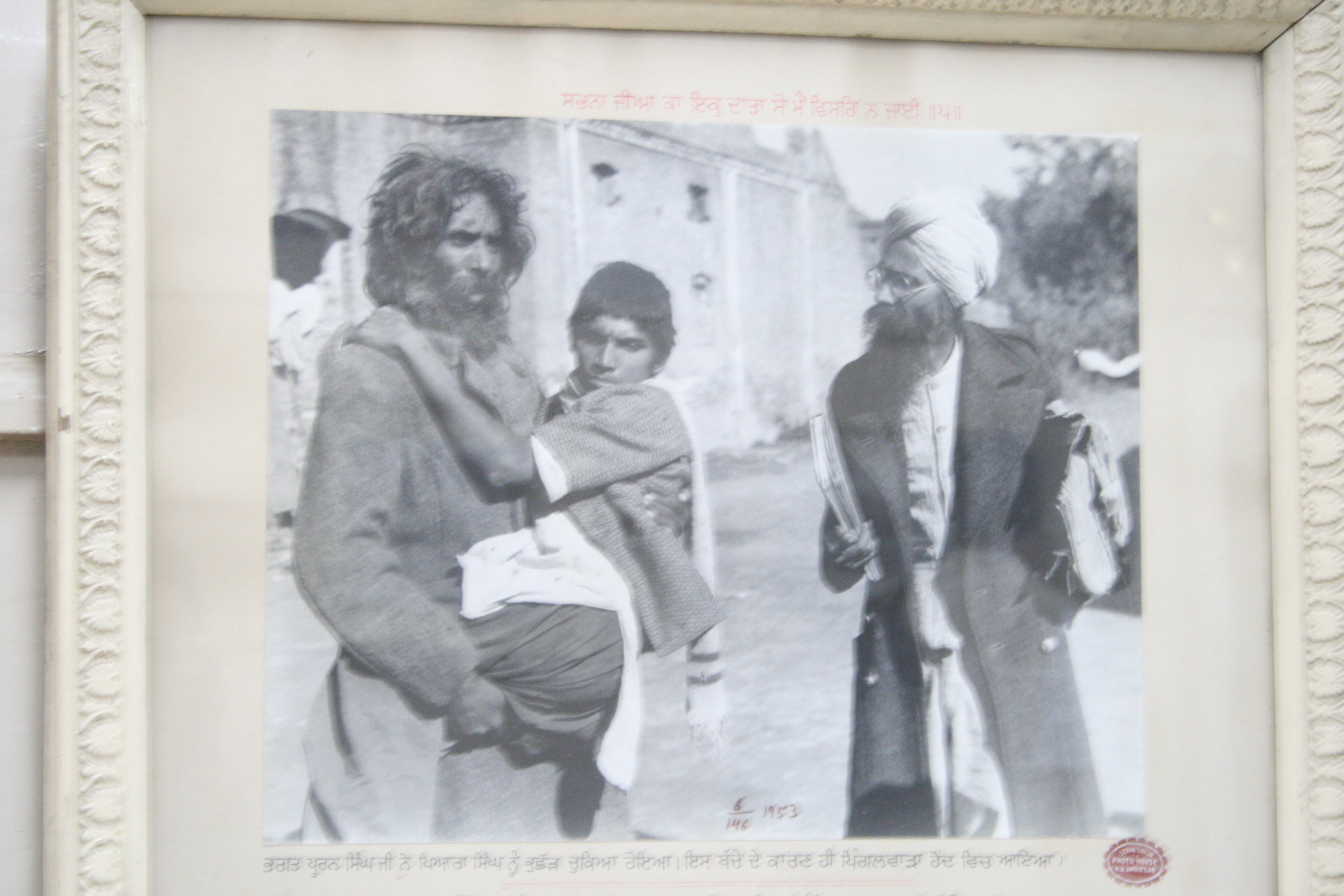
This was a remarkable place, and the story behind it is even more compelling. Pingalwara's formation was sparked in 1934 by Bhagat Puran Singh Ji in Amritsar, Punjab.
.
For over 14 years, Bhagat Puran Singh devoted himself to caring for an abandoned child with severe disabilities, often carrying him on his back. The Partition of Punjab in 1947, which ultimately led to the creation of Pakistan, was a time of unimaginable suffering and upheaval. Millions of families were forced to leave everything behind in Pakistan to seek safety in India. My own grandparents experienced this harrowing journey, surviving the ordeal but tragically losing many of their children along the way. It was a profoundly traumatic period in India's history, marked by loss and despair.

In 1948, as he began to establish Pingalwara, Bhagat Puran Singh often stood on the streets, reaching out to strangers for help. With the donations he gathered, he provided food, clothing, and medical care for the sick and suffering. He not only fed and bathed those in need but also ensured they received proper medical treatment. No matter the challenges he faced—whether it was war, disease, or harsh weather—his spirit remained unbroken. He consistently rescued those who were stranded, caring for everyone, regardless of their condition.

Pingalwara, which translates to "a house or asylum for the disabled, handicapped, or crippled," opened its doors to a diverse community. It also cares for the elderly, individuals who have experienced abuse, and those suffering from terminal illnesses. The center features a touching museum dedicated to Bhagat Puran Singh, showcasing photographs from his early life and simple belongings. His legacy is a beautiful tapestry woven with compassion and hope.

It is said that "...Pingalwara is full of legends that would never make the newspapers—success stories about those saved from garbage bins in their infancy, girls mistreated and abandoned by their families, and mentally challenged adults who would otherwise face a life in harsh asylums" (All India Pingalwara Charitable Society).

Bhagat Puran Singh was truly a visionary. At a time when many disregarded critical environmental issues, he tirelessly fought for the preservation of nature. He advocated for reforestation, the conservation of natural resources, and a sustainable lifestyle, urging people to limit their reliance on fossil fuels.

During our visit to Pingalwara, we were warmly welcomed by Dr. Inderjit Kaur, who now carries on Bhagat Puran Singh's noble work. She graciously showed us around the main branch, where living quarters and daily classes provide a nurturing environment for neglected children and women with mental impairments. We also visited the branch on the outskirts of Amritsar, home to a school for underprivileged children and a center offering prosthetics and physical therapy. The dedication of the employees and volunteers was deeply inspiring; they were fully committed to teaching, repairing, building, and providing essential services to those in need.

We felt profoundly moved by their efforts and chose to support their cause with a donation, knowing that any contribution would play a critical role in enhancing the lives of those in need. Pingalwara's work is vital, creating a safe and compassionate space for those who need it most.

Photos

Conjoined twins on all vital organs who can never be separated. Pingalwara Center, Amritsar, Punjab. October 26, 2006.
Young girls at the school for the underprivileged.
Child of a woman with severe mental impairment.

Team member, Rebecca and children dancing to Bhangra music.

Sweet, kind children at the school dedicated to the underpriveliged.

A fun-loving girl being cared for in a class for children with cognitive differences.

Children having a nice chuckle.


At the Pingalwara, this is an old school print shop where people are provided with small employment opportunities to publish Bhagat Puran Singh's manuscripts for free public distribution.

Team with Pingalwara President Dr. Inderjit Kaur (pictured second from right). Dr. Inderjit Kaur has been guiding Pingalwara with dedication and compassion since the passing of Bhagat Puran Singh in 1992.

17 November 2006

Dharamsala to Amritsar

A Surprisingly Arduous Journey

Our journey from Dharamsala to Amritsar was absolute madness. The traffic congestion, road closures, detours, and holiday celebrations in honor of Baba Buddha (1506-1631) made traveling quite arduous.


As we finally entered the Amritsar district, I could feel the frustration in the air as traffic turned into a constant stop-and-go rhythm. Each time we halted, I noticed a group of Sikh boys eagerly jumping onto our jeep, ready to clean it and enthusiastically offer beverages. It seemed almost normal to me, but since most of the team members have never traveled in this manner, their reaction was funny. Some thought we were being overwhelmed or even attacked. I took a moment to reassure them, explaining that the holiday was a time for celebration, and the local people were simply expressing their hospitality by cleaning vehicles and offering drinks to travelers along the busy roads. They were not begging or asking for handouts, nor trying to harm us.

We left Dharamsala in the early afternoon but did not reach Amritsar until about 8 PM. Our new drivers were not very skilled, and we really missed our Punjabi-speaking Tibetan drivers. Once we arrived in Amritsar, Tom and his other guide, Hekani, arranged for us to stay at a guest house that was unsettling and rather creepy for most of the team. Some team members refused to stay there, so we opted for the "Ritz Plaza". I wasn’t thrilled about it, but it was the best option we had at that point of the night. It had been an overwhelming day of travel for the team so having a place to stay for the night provided a sense of calm.

The government of Punjab needs to consider improving the conditions of their roads and highways, along with more practical design and infrastructure. Perhaps they could entertain proposals from experts in engineering and architecture as a starting point for much-needed reform and restructuring.

The highlight of our visit to Amritsar was undoubtedly Harimandar Sahib, known as the Sikh Golden Temple to many westerners. Its architectural beauty and serene ambiance left a lasting impression on all of us. Sitting by the water's edge near the Gurudwara instilled a deep sense of peace. I sincerely hope that the administrators continue to uphold its beauty and protect it from any deterioration, as it is a cherished sanctuary for so many.

Lisa and I went to the Golden Temple the night we arrived in Amritsar, October 26, 2006.

09 November 2006

Village Conditions in Jalundhar District, Punjab

Village Mindset


One of the few homes with a door, home of Late Jagat Singh and his family

During our visit to several villages in the Jalandhar District, we observed a notable disparity between the urban centers and the rural communities. The cities in Punjab face challenges such as pollution, primarily due to smog, as well as issues related to city planning and inadequate landscaping. Nevertheless, these urban areas still enjoy access to essential resources, technology, and modern amenities.
Radisson in Jalundhar city

In contrast, the villages serve as the heart of Punjab’s agricultural workforce, highlighting the region's reputation as the agricultural capital of India. The scenic farms, adorned with lush green pastures, offer a refreshing reprieve from the urban environment. However, we found that many homes in the villages we visited were in significant disrepair.

For instance, in the central area of Khaira Majja village, we noted a few larger houses amidst several that were considerably deteriorated. The stark contrast between the well-maintained home and its dilapidated neighbors was striking, revealing the depth of poverty present in the area.

The women of the village welcomed us graciously, sharing insights into their living conditions. Many residences consisted of one bedroom accommodating multiple family members, with kitchen facilities integrated into the bedroom.

Some team members offered the women money, but I felt conflicted. I know people of Punjab, in general, to be prideful and hardworking people. Many of the women expressed their emotions, tears of pride and sadness evident on their faces, with some of the women reluctantly taking the money. I understood the pride in not wanting to take it, but I was certain that they would use that cash to buy food or necessities for their children.

One woman openly greeted us and said, "Welcome to the homes of the poor. What can we do for you?"

As I looked around, examining their homes, the narrow alleys leading to them, and the overall well-being of the small community, I identified the most significant issue: the mindset of the people.

The weight of poverty can create a sense of hopelessness, making it challenging for individuals to envision pathways to empowerment and improvement for their community. Yet, the resilience and optimism of the Punjabi people were evident. Our team was inspired by the small but meaningful initiatives underway, such as the development of a small generator, the construction of a model school for younger children, and efforts to establish a proper sewage disposal system. The village people were clearly committed to investing in the future of their children, They shared the belief that "we've lived our life and it isn't going to change much, but maybe we could make it a little better for our children."

Pictured above is a "Narlka," which is where several families get their water source for cooking, bathing, and washing.

It is crucial for the state government to enhance support for these communities through increased funding for education, improved access to basic utilities such as electricity and water, and enhanced healthcare services. Additionally, it would be beneficial for villagers to embrace a more proactive approach to uplift their communities, moving beyond a mindset of helplessness toward tangible progress. I firmly believe that one's internal environment greatly influences their external surroundings. If individuals find themselves in challenging mental and physical living situations, it can hinder community vitality.

Approximately 99% of the homes we observed in this village were deteriorating, appearing extremely tarnished and abandoned, even though entire families were living in them. I understand that constructive change must begin from within and then radiate outward. Unfortunately, the villagers cannot implement these changes on their own; they need resources, practical tools, and assistance from external sources.

Pictured are young girls trying to keep a home clean by sweeping the floors.

Mrs. Singh, who is the Sarpanch of the village (leader of the Panchayat), stands before her husband to greet us.

Primary Khalsa Public School, Jalundhar, Part II

JALUNDHAR, PUNJAB


This is the Model Primary School that the village panchayat (local lawmakers) has started and is still trying to build. The kids are primarily in nursery to the 5th grade. For primary education, there is free education until the beginning of 6th grade at government aided public schools. However, according to the teachers, when the kids were entering junior high, they did not know basics in language, math, science so the model school was established. The village is struggling to make ends meet, there is a lack of books, writing utensils, paper, supplies, proper lighting, and classroom space.
/>
The youngsters were precious, and so shy when they first met us! Team member Rebecca brought them markers, crayons, and candy for which they were thrilled.

Pictured are two preschool students, and the school bus for the little kids. The older ones walk or ride their bikes.

The students definitely were not shy anymore after we went to their classrooms, held discussions, answered their questions, and introduced them to an IPod and computers.

The adjoining land where the school hopes to expand the preschool to accomodate the students.

Lisa taking copious notes with Cherlyn walking outside the Khalsa Public School.
RebeccaHarjit.jpg
Rebecca and I at the Primary School. Tom ready to go after our wonderful time at the school.

Rural Senior Secondary School, Jalundhar, Part I

KHALSA SENIOR SECONDARY SCHOOL, JALUNDHAR


One of our most moving experiences took place at Khalsa Public School, where the innocence of the children, the candidness of the mostly female teachers, and the genuine concern of the village panchayat (local village government) for the welfare of their children deeply touched us. They welcomed us with open arms and genuine excitement upon our arrival. This village is the ancestral home of some of my relatives, and since it was my first visit, the experience felt all the more special.

Here is the school committee greeting us on our arrival. "Welcome" inscribed and a flower drawn in chalk.

School Comittee members, teachers, students, and our group on our arrival.

During our visit to the school, we interviewed 3 teachers who taught Punjabi language, Arts & Crafts, and Mathematics.
They were very candid about the conditions of the schools, highlighting the lack of educational resources and the absence of technology for the students. We also inquired about serious issues such as infanticide, domestic violence, and caste discrimination. The responses we received were incredibly informative and insightful, shedding light on the challenges faced by the community. I plan to discuss these topics in more detail in a future post.
IMG_6381.JPG
Their charisma was contagious, and it was unfortunate that there is a lack of public resources for these women to expand their horizons. They need access to technology to enhance their teaching and to educate other women, thereby improving their status. We decided to offer future support that could potentially be sustainable for these women and children. The school committee, while generous, open-minded and dedicated to improvement, would greatly benefit from additional educational support, as many members lack formal education which makes it challenging to provide the children with the resources they need. Outside resources, international involvement, philanthropic interest, and dedicated individuals with educational backgrounds could help transform this village.

Rebecca got the children excited about her iPod, which most of them had either never heard of or seen in person. We conducted a poll, asking over 100 students if they had ever used a computer; surprisingly, only one boy said he had used one just once. With over 700 students in total, the school lacks a single computer.

Lisa taking part in class! These students who were so eager to learn. The students were beautifully diverse coming from various Punjabi backgrounds and representing Sikh, Hindu, and Christian faiths.

Older Posts Home
 
Creative  Commons License
This work is licensed under a Creative Commons Attribution-NonCommercial-NoDerivs 2.5 License.