Google

19 December 2006

The Greatest Generation...

Unfortunately when our team left Dharamsala for Amritsar, I got notice that my Grandfather had fallen gravely ill. Before leaving for India, I had promised him that I would do Ardas (pray) in Amritsar, the Sikh holy city.

We were in Amritsar until the October 27th, and left for Delhi via train. I knew I needed to go home urgently. I arrived in California late October 28th, and went directly to the hospital where my Grandfather was. I spent that evening and the next day with him until he took his last breath on October 29th.

A.S. Sandhu, 1913-2006

He is the survivor of India's independence from the British, the bloody Partition of Punjab after the British relinquished control of India, and the tragic loss of all his children except his one living daughter. Bloodshed and disease were rampant during that time and medical care was poor, if not absent. He was a true survivor, eternally in chardi kala (high spirits). His dignity, wisdom, talent, and total dedication and integrity inspired awe and respect for him from all who came in contact with him. He lived his belief of purity of mind (ishnan), compassion for all human beings (daan), and unshakable love for God and his creation (naam). He exemplified dignity of labor by being a doer, a creator who was actively involved all his life.

Tom Brokaw wrote a book about the generation of American heroes who were in their prime during the Great Depression and World War II. This generation was linked not only by a common purpose, but also by common values--duty, honor, courage, service, love of family and country, and, above all, responsibility for oneself. In this book, Brokaw introduces people whose everyday lives reveal how a generation persevered through war, and were trained by it. It is said that generation was "the greatest generation any society has ever produced."

Along similar lines, I feel the same way about the Indian men and women who lived during World War II, the fight against British imperialism, the fight for India's independence, and the deadly Partition of Punjab­. My grandparents are of this era. Despite losing everything including their home, land, priceless family tree and heirlooms, and the many family members along the way, they remained steadfast in their integrity, dignity, courage, love of family and country, and their responsibility as human beings.

It seems like the end of an era...a time and place that will never be the same again. My Grandfather has been the most influential and dearest person in my life. Coming to terms with his passing is so sad and make me wish for a time long past. My Grandfather's faith in God was deep and his gentleness, yet strength were admirable...He had qualities were exceptional, and I am confident he is someplace very lovely...We celebrated his incredible life and his beautiful legacy.

Sri Harimandar Sahib, where I prayed for my Grandfather

18 November 2006

Pingalwara

Pingalwara Center: A Place for Hope, Health and Happiness


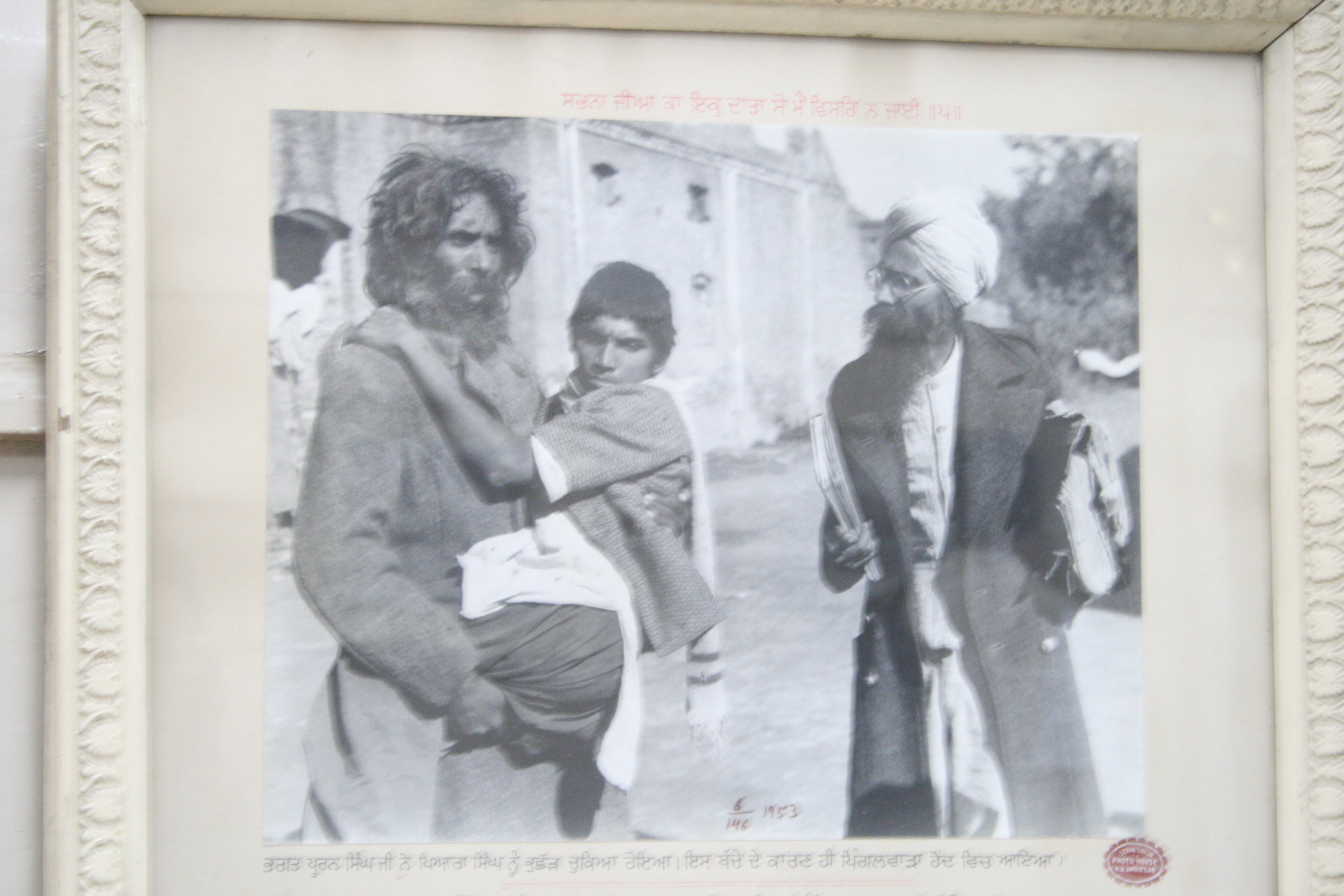
This was a remarkable place, and the story behind it is even more compelling. Pingalwara's formation was sparked in 1934 by Bhagat Puran Singh Ji in Amritsar, Punjab.
.
For over 14 years, Bhagat Puran Singh devoted himself to caring for an abandoned child with severe disabilities, often carrying him on his back. The Partition of Punjab in 1947, which ultimately led to the creation of Pakistan, was a time of unimaginable suffering and upheaval. Millions of families were forced to leave everything behind in Pakistan to seek safety in India. My own grandparents experienced this harrowing journey, surviving the ordeal but tragically losing many of their children along the way. It was a profoundly traumatic period in India's history, marked by loss and despair.

In 1948, as he began to establish Pingalwara, Bhagat Puran Singh often stood on the streets, reaching out to strangers for help. With the donations he gathered, he provided food, clothing, and medical care for the sick and suffering. He not only fed and bathed those in need but also ensured they received proper medical treatment. No matter the challenges he faced—whether it was war, disease, or harsh weather—his spirit remained unbroken. He consistently rescued those who were stranded, caring for everyone, regardless of their condition.

Pingalwara, which translates to "a house or asylum for the disabled, handicapped, or crippled," opened its doors to a diverse community. It also cares for the elderly, individuals who have experienced abuse, and those suffering from terminal illnesses. The center features a touching museum dedicated to Bhagat Puran Singh, showcasing photographs from his early life and simple belongings. His legacy is a beautiful tapestry woven with compassion and hope.

It is said that "...Pingalwara is full of legends that would never make the newspapers—success stories about those saved from garbage bins in their infancy, girls mistreated and abandoned by their families, and mentally challenged adults who would otherwise face a life in harsh asylums" (All India Pingalwara Charitable Society).

Bhagat Puran Singh was truly a visionary. At a time when many disregarded critical environmental issues, he tirelessly fought for the preservation of nature. He advocated for reforestation, the conservation of natural resources, and a sustainable lifestyle, urging people to limit their reliance on fossil fuels.

During our visit to Pingalwara, we were warmly welcomed by Dr. Inderjit Kaur, who now carries on Bhagat Puran Singh's noble work. She graciously showed us around the main branch, where living quarters and daily classes provide a nurturing environment for neglected children and women with mental impairments. We also visited the branch on the outskirts of Amritsar, home to a school for underprivileged children and a center offering prosthetics and physical therapy. The dedication of the employees and volunteers was deeply inspiring; they were fully committed to teaching, repairing, building, and providing essential services to those in need.

We felt profoundly moved by their efforts and chose to support their cause with a donation, knowing that any contribution would play a critical role in enhancing the lives of those in need. Pingalwara's work is vital, creating a safe and compassionate space for those who need it most.

Photos

Conjoined twins on all vital organs who can never be separated. Pingalwara Center, Amritsar, Punjab. October 26, 2006.
Young girls at the school for the underprivileged.
Child of a woman with severe mental impairment.

Team member, Rebecca and children dancing to Bhangra music.

Sweet, kind children at the school dedicated to the underpriveliged.

A fun-loving girl being cared for in a class for children with cognitive differences.

Children having a nice chuckle.


At the Pingalwara, this is an old school print shop where people are provided with small employment opportunities to publish Bhagat Puran Singh's manuscripts for free public distribution.

Team with Pingalwara President Dr. Inderjit Kaur (pictured second from right). Dr. Inderjit Kaur has been guiding Pingalwara with dedication and compassion since the passing of Bhagat Puran Singh in 1992.

Newer Posts Older Posts Home
 
Creative  Commons License
This work is licensed under a Creative Commons Attribution-NonCommercial-NoDerivs 2.5 License.